🇦🇩Country
Andorra: a summer forge, seven keys and a stucco Christ
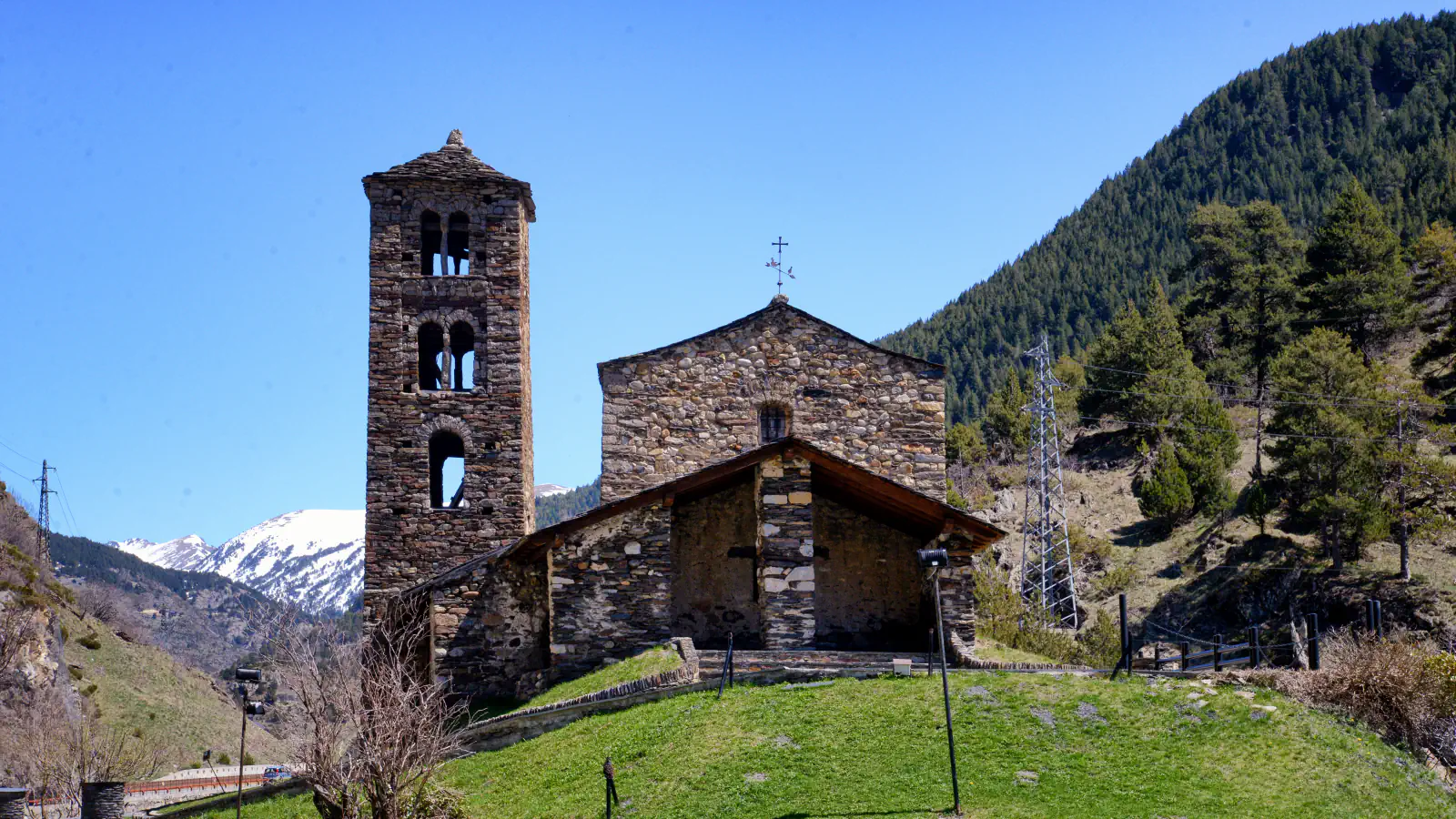
At a high site in the Madriu valley, a forge worked mainly in summer. Casa de la Vall’s archive cupboard requires all seven keys to open. A head fragment found beside the altar at Sant Joan de Caselles in 1963 led to excavation that recovered a large part of a stucco Christ.
At a glance
A place worth remembering
A seasonal forge in the Madriu valley
The Madriu-Perafita-Claror landscape includes the River Madriu basin in south-eastern Andorra and covers 4,247 ha, about a tenth of the country. Lease agreements kept by the comú of Andorra la Vella indicate that the forge, at the place now called Solà de la Farga, was built in 1732. Its high, remote location limited work largely to summer; the forge disappeared between 1832 and 1836.[1][2]
A house and its archive cupboard
A Romanesque Christ rebuilt from fragments
At Sant Joan de Caselles, a stucco Christ and a Crucifixion fresco occupy the same wall. The figure is 1.75 m high; Catalunya romànica describes the stucco as fine gypsum and water mixed with animal glue, strengthened with pine needles. A head fragment found beside the altar during work on the Gothic altarpiece in 1963 prompted an excavation that recovered a large part of the statue. Researchers tested the fragment positions against a replica of the low-relief cross on the south wall of the nave; the head and feet aligned with openings in the original. The fresco places the sun and moon above Christ and a lance bearer and sponge bearer below. Almost all of the moon was lost when workers lifted a later painted layer. Restorers inferred its design from the surviving sun, though the authors say the original may have differed. Andorra Turisme dates the Romanesque building to the 11th–12th centuries and describes a rectangular nave, semicircular apse, Lombard-style bell tower and two porches.[6][7]
Good to know
A few clear answers before you explore.
Which landforms are described at Camp de Claror?
The valley’s geomorphology account describes stone circles and polygons there, comparing them with forms found in subpolar and tundra regions.[3]
What do the shields at the entrance of Casa de la Vall record?
The heritage inventory says a shield at the entrance door shows the date 1580, the family symbol and the name “Anto.B.”; it also mentions a separate shield dated 1763 above the door.[4]
Is the moon in the Sant Joan de Caselles wall painting original?
No. Almost all of it was lost when a later painted layer was lifted, and restorers inferred the replacement from the surviving sun. The authors of Catalunya romànica caution that the original may have differed.[6]
The WorldStamped community
Every visit becomes part of a story.
- Members with public visits
- 0
- Places with public visits or memories
- 0
- Public memories
- 0
No public visits have been counted here yet. Add this destination to your own map and choose what you want to share.
Members are counted once. Counts include only eligible public activity from profiles that allow search discovery. Private and followers-only content is excluded.